<?xml version="1.0" encoding="utf-8"?><feed xmlns="http://www.w3.org/2005/Atom" xml:lang="en-GB"><generator uri="https://jekyllrb.com/" version="3.10.0">Jekyll</generator><link href="https://marifa.org/feed.xml" rel="self" type="application/atom+xml" /><link href="https://marifa.org/" rel="alternate" type="text/html" hreflang="en-GB" /><updated>2026-06-11T12:37:56+01:00</updated><id>https://marifa.org/feed.xml</id><title type="html">Marifa</title><subtitle>Stories of and from saints across Dar al Islam — a Marifa service by Islamic Network.</subtitle><author><name>Islamic Network</name></author><entry><title type="html">Service of the Sultan or Effort of the Arm</title><link href="https://marifa.org/stories/service-of-the-sultan-or-effort-of-the-arm/" rel="alternate" type="text/html" title="Service of the Sultan or Effort of the Arm" /><published>2026-06-11T00:00:00+01:00</published><updated>2026-06-11T00:00:00+01:00</updated><id>https://marifa.org/stories/service-of-the-sultan-or-effort-of-the-arm</id><content type="html" xml:base="https://marifa.org/stories/service-of-the-sultan-or-effort-of-the-arm/"><![CDATA[<p>There were two brothers: one of them in the service of the sultan and the other gaining his livelihood by the effort of his arm.</p>

<p>The wealthy man once asked his destitute brother why he did not serve the sultan in order to be delivered from the hardship of labouring.</p>

<p>He replied: 'Why labourest thou not to be delivered from the baseness of service because the wise men have said that it is better to eat barley bread and to sit than to gird oneself with a golden belt and to stand in service?'</p>

<blockquote>
  <p>To leaven mortar of quicklime with the hand
Is better than to hold them on the breast before the amīr.</p>

  <p>My precious life was spent in considering
What I am to eat in summer and wear in winter.
O ignoble belly, be satisfied with one bread 
Rather than to bend the back in service.</p>
</blockquote>

<p><strong>Translated from the Persian Edward Rehatsek</strong></p>]]></content><author><name>Islamic Network</name></author><category term="service" /><category term="effort" /><category term="humility" /><summary type="html"><![CDATA[A conversation between two brothers about which is better - serving the sultan or the effort of the arm.]]></summary><media:thumbnail xmlns:media="http://search.yahoo.com/mrss/" url="https://marifa.org/assets/img/tomb-of-saadi.png" /><media:content medium="image" url="https://marifa.org/assets/img/tomb-of-saadi.png" xmlns:media="http://search.yahoo.com/mrss/" /></entry><entry><title type="html">The Vizier and Dhul-noon al-Misri ق</title><link href="https://marifa.org/stories/the-vizier-and-dhul-noon-al-misri/" rel="alternate" type="text/html" title="The Vizier and Dhul-noon al-Misri ق" /><published>2026-06-10T00:00:00+01:00</published><updated>2026-06-10T00:00:00+01:00</updated><id>https://marifa.org/stories/the-vizier-and-dhul-noon-al-misri</id><content type="html" xml:base="https://marifa.org/stories/the-vizier-and-dhul-noon-al-misri/"><![CDATA[<p>A vizier paid a visit to Dhul Noon al-Misri ق and asked for his favour, saying: 'I am day and night engaged in the service of the sultan and hoping to be rewarded but nevertheless dread to be punished by him.'</p>

<p>Dhul Noon wept and said: 'Had I feared God, the Great and Glorious, as thou fearest the sultan, I would be one of the number of the righteous.'</p>

<blockquote>
  <p>If there were no hope of rest and trouble
The foot of the dervish would be upon the sphere
And if the vizier feared God
Like the king he would be king</p>
</blockquote>

<p><strong>Translated from the Persian Edward Rehatsek</strong></p>]]></content><author><name>Islamic Network</name></author><category term="service" /><category term="humility" /><category term="dedication" /><summary type="html"><![CDATA[Dhul Noon al-Misri ق compares the service of the vizier to the sultan to his own service to God]]></summary><media:thumbnail xmlns:media="http://search.yahoo.com/mrss/" url="https://marifa.org/assets/img/tomb-of-saadi.png" /><media:content medium="image" url="https://marifa.org/assets/img/tomb-of-saadi.png" xmlns:media="http://search.yahoo.com/mrss/" /></entry><entry><title type="html">Thou Repayest Tenfold, and I Firmly Believed</title><link href="https://marifa.org/stories/thou-repayest-tenfold-and-i-firmly-believed/" rel="alternate" type="text/html" title="Thou Repayest Tenfold, and I Firmly Believed" /><published>2026-06-01T00:00:00+01:00</published><updated>2026-06-01T00:00:00+01:00</updated><id>https://marifa.org/stories/thou-repayest-tenfold-and-i-firmly-believed</id><content type="html" xml:base="https://marifa.org/stories/thou-repayest-tenfold-and-i-firmly-believed/"><![CDATA[<p><img src="/assets/img/imam-ali-mosque-basra.png" alt="Imām Ali Mosque in Basra" loading="lazy" decoding="async" /></p>

<p>Two notables of the Faith came to visit Rābe‘a, and both were hungry.</p>

<p>“It may be that she will give us food,” they said to each other. “Her food is bound to come from a lawful source.”</p>

<p>When they sat down there was a napkin with two loaves laid before them. They were well content. A beggar arrived just then, and Rābe‘a gave him the two loaves. The two men of religion were much upset, but said nothing. After a while a maidservant entered with a handful of warm bread.</p>

<p>“My mistress sent these,” she explained.</p>

<p>Rābe‘a counted the loaves. There were eighteen.</p>

<p>“Perhaps it was not this that she sent me,” Rābe‘a remarked.</p>

<p>For all that the maidservant assured her, it profited nothing. So she took back the loaves and carried them away. Now it so happened that she had taken two of the loaves for herself. She asked her mistress, and she added the two to the pile and returned with them. Rābe‘a counted again, and found there were twenty loaves. She now accepted them.</p>

<p>“This is what your mistress sent me,” she said.</p>

<p>She set the loaves before the two men and they ate, marvelling.</p>

<p>“What is the secret behind this?” they asked her. “We had an appetite for your own bread, but you took it away from us and gave it to the beggar. Then you said that the eighteen loaves did not belong to you. When they were twenty, you accepted them.”</p>

<p>“I knew when you arrived that you were hungry,” Rābe‘a replied. “I said to myself, How can I offer two loaves to two such notables? So when the beggar came to the door I gave them to him and said to Almighty God, ‘O God, Thou hast said that Thou repayest tenfold, and this I firmly believed. Now I have given two loaves to please Thee, so that Thou mayest give twenty in return for them.’ When eighteen were brought me, I knew that either there had been some misappropriation, or that they were not meant for me.”</p>

<p><strong>Translated from the Persian by A.J. Arberry</strong></p>]]></content><author><name>Islamic Network</name></author><category term="covenant" /><category term="belief" /><category term="bread" /><category term="guests" /><category term="repayment" /><summary type="html"><![CDATA[Rābe‘a al Adawiya's firm belief in God's word results in a meal worthy of her notable guests.]]></summary><media:thumbnail xmlns:media="http://search.yahoo.com/mrss/" url="https://marifa.org/assets/img/naqshandi-haqqani.webp" /><media:content medium="image" url="https://marifa.org/assets/img/naqshandi-haqqani.webp" xmlns:media="http://search.yahoo.com/mrss/" /></entry><entry><title type="html">The Night Rābe‘a Came to Earth</title><link href="https://marifa.org/stories/the-night-rabea-came-to-earth/" rel="alternate" type="text/html" title="The Night Rābe‘a Came to Earth" /><published>2026-05-31T00:00:00+01:00</published><updated>2026-05-31T00:00:00+01:00</updated><id>https://marifa.org/stories/the-night-rabea-came-to-earth</id><content type="html" xml:base="https://marifa.org/stories/the-night-rabea-came-to-earth/"><![CDATA[<p><img src="/assets/img/haydar-khana-mosque.jpg" alt="Haydar Khana Mosque in Baghdad built on top of a 12th-century mosque built by Abbasid Caliph al-Nasir" loading="lazy" decoding="async" /></p>

<p>The night when Rābe‘a came to earth, there was nothing whatsoever in her father’s house; for her father lived in very poor circumstances. He did not possess even one drop of oil to anoint her navel; there was no lamp, and not a rag to swaddle her in. He already had three daughters, and Rābe‘a was his fourth; that is why she was called by that name.</p>

<p>“Go to neighbour So-and-so and beg for a drop of oil, so that I can light the lamp,” his wife said to him.</p>

<p>Now the man had entered into a covenant that he would never ask any mortal for anything. So he went out and just laid his hand on the neighbour’s door, and returned.</p>

<p>“They will not open the door,” he reported.</p>

<p>The poor woman wept bitterly. In that anxious state the man placed his head on his knees and went to sleep. He dreamed that he saw the Prophet.</p>

<p>“Be not sorrowful,” the Prophet bade him. “The girl child who has just come to earth is a queen among women, who shall be the intercessor for seventy thousand of my community. Tomorrow,” the Prophet continued, “go to Isa-e Zadan the governor of Basra. Write on a piece of paper to the following effect: ‘Every night you send upon me a hundred blessings, and on Friday night four hundred. Last night was Friday night, and you forgot me. In expiation for that, give this man four hundred dinars lawfully acquired.’ ”</p>

<p>Rābe‘a’s father on awaking burst into tears. He rose up and wrote as the Prophet had bidden him, and sent the message to the governor by the hand of a chamberlain.</p>

<p>“Give two thousand dinars to the poor,” the governor commanded when he saw the missive, “as a thanksgiving for the Master remembering me. Give four hundred dinars also to the shaikh, and tell him, ‘I wish you to come to me so that I may see you. But I do not hold it proper for a man like you to come to me. I would rather come and rub my beard in your threshold. However, I adjure you by God, whatever you may need, pray let me know.’ ”</p>

<p>The man took the gold and purchased all that was necessary.</p>

<p><strong>Translated from the Persian by A.J. Arberry</strong></p>]]></content><author><name>Islamic Network</name></author><category term="covenant" /><category term="blessing" /><category term="birth" /><summary type="html"><![CDATA[Rābe‘a al Adawiya's birth and her father's covenant that he would never ask any mortal for anything.]]></summary><media:thumbnail xmlns:media="http://search.yahoo.com/mrss/" url="https://marifa.org/assets/img/naqshandi-haqqani.webp" /><media:content medium="image" url="https://marifa.org/assets/img/naqshandi-haqqani.webp" xmlns:media="http://search.yahoo.com/mrss/" /></entry><entry><title type="html">On Seeing the Good in People</title><link href="https://marifa.org/stories/on-seeing-the-good-in-people/" rel="alternate" type="text/html" title="On Seeing the Good in People" /><published>2026-03-03T00:00:00+00:00</published><updated>2026-03-03T00:00:00+00:00</updated><id>https://marifa.org/stories/on-seeing-the-good-in-people</id><content type="html" xml:base="https://marifa.org/stories/on-seeing-the-good-in-people/"><![CDATA[<p><img src="/assets/img/naqshandi-haqqani.webp" alt="Elders of the Naqshbandi Haqqani Tariqa" loading="lazy" decoding="async" /></p>

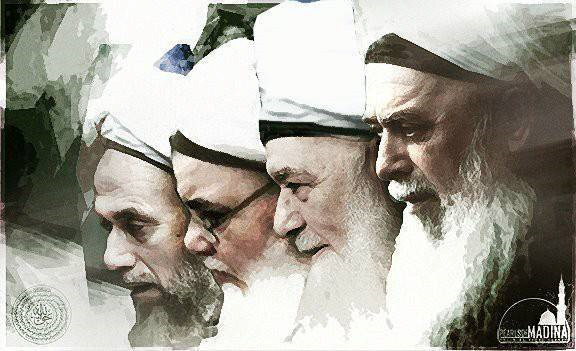
<p>Mawlana [Abdullah al-Fāiz al-Dāghestāni ق] said there was a wretched man from whom people never felt safe, not with regard to their possessions, not with regard to their lives and not with regard to their reputations for 37 years. At last the man died. People exulted. It was like a festival day for them. When they all gathered to bury him his bier could not be moved and they could not carry him forward from his place. They kept trying but to no avail. It was as if he was stuck to the ground. They said, "What is this ordeal? Alive and dead he is such a weight on us?" The news reached our liege lord 'Abd al-Khāliq al-Ghujduwāni - Allah sanctify his secret - who came and tried to lift the bier but again it would not move. He asked the villagers, "Who here knows of any good deed that this man did?" They replied, "We never saw anything but affliction from him. Praise to Allāh, he is dead so that we can rest easy!" Then he asked his wife and children. They said he had another wife. They sent for her and when she came the shaykh asked her the same question. She said, "Praise be to Allāh that he died, for I never saw any good coming from him ever!" But he kept asking her with such severity that he reminded her of something in her heart. She felt fear and she said, "He came to me one day and said, 'Woman, today something happened with me and I am still wondering how such a thing occurred. I was in my usual occupation’ — he was a highway robber — ‘and I saw a man carrying a box. I greeted him, although I never greet anyone nor do I return anyone's greeting, then I walked with him and I asked him about the box. He said it was honey and that he was going to visit Shaykh ‘Abd al-Khāliq al-Ghujduwānī because he attended the khatm at his place, and after the khatm the Shaykh treats everyone to honey. So I carried the box for him and walked with him a certain distance. I gave it back to him at the parting of the roads and I greeted him, and I regret not taking the box from him, and I am wondering what happened to me.’”</p>

<p>When Shaykh ‘Abd al-Khāliq al-Ghujduwānī heard this he exclaimed, “Glory to Allāh! O my nurturing Lord, this is Your servant, he served me, and You have promised us that whoever rises to serve us will not be shamed, not in this world and not in the next.” At that time they saw the bier moving and rising, and they started walking behind it as it was above their heads and they could not touch it. Thus, with even a small service, there is a promise from Allah that He will not put to shame whoever serves the Awliya and whoever loves them. This man did not know any love but he now have this service to his credit according to this foundation. Our liege lord ‘Abd al-Khāliq al-Ghujduwānī was well-pleased with this service and on the spot it became an answer from Allah. All the people walked behind him. They said, “This is the miraculous gift of al-Ghujduwānī.”</p>

<p>When they entered him into the grave, green leaves came down from the sky. On each of them were written the names of those that were present and on them the promise of Paradise! Whoever got that green leaf on that day rose to bliss. At that time that man’s tongue spoke in clear Arabic: “O my master al-Ghujduwānī, these people all were harmed by me, and this is their witness, but because of a small service done to you, I had a generous gift, and with this generous gift I asked my nurturing Lord to grant bliss to all that had been harmed by me. My nurturing Lord told me to make this request and then He granted it!”</p>

<p>What a matter, something wondrous. It is not known how He will grant mercy to his servant or how He will lavish generosity on him. Why did we retell this? Because we do not know that Allāh has put goodness into every servant…</p>

<p><em>Translated from the Arabic by Shaykh Gibril Fouad Haddad ﵀</em></p>]]></content><author><name>Islamic Network</name></author><category term="people" /><category term="blessing" /><category term="goodness" /><summary type="html"><![CDATA[A man no one mourned cannot be lifted into his grave — until Shaykh Abd al-Khaliq al-Ghujduwānī ق discovers the single salaam that saved him.]]></summary><media:thumbnail xmlns:media="http://search.yahoo.com/mrss/" url="https://marifa.org/assets/img/naqshandi-haqqani.webp" /><media:content medium="image" url="https://marifa.org/assets/img/naqshandi-haqqani.webp" xmlns:media="http://search.yahoo.com/mrss/" /></entry><entry><title type="html">On Keeping Silent</title><link href="https://marifa.org/stories/on-keeping-silent/" rel="alternate" type="text/html" title="On Keeping Silent" /><published>2025-12-26T00:00:00+00:00</published><updated>2025-12-26T00:00:00+00:00</updated><id>https://marifa.org/stories/on-keeping-silent</id><content type="html" xml:base="https://marifa.org/stories/on-keeping-silent/"><![CDATA[<p><img src="/assets/img/al-haram-madina.png" alt="The Prophet's Mosque in Madina al Munawwara" loading="lazy" decoding="async" /></p>

<p>Our master the Shaykh (Abdullah al-Fāiz al-Dāghestāni ق) recounted that in the time of the Prophet — upon him the blessings and
peace of Allah — on a certain night at a late hour, Jibril came down with an important matter from the presence of 
Allah to His Messenger. In light of the gravity of the matter the Messenger of Allah sent word for Bilal to call out 
to the people so that they would gather in the noble Mosque. The time was late. The Companions became alarmed and 
were asking themselves, are we under attack by the enemy? When they gathered, the Messenger of Allah conveyed
to them the command of his nurturing Lord, namely:</p>

<p>"O Muhammad! convey the news that whoever brings up the report of something that has already passed and has 
been dead and buried—even if it took place two hours before — and fitna flares up because of it, then that will 
be a <strong>reason for incurring the curse of Allah and of His Messenger</strong>. It will be the awakening of fitna. 
Fitna is dormant, Allah has cursed whoever awakens it! This is the matter that Jibril has brought and which he has 
ordered to be announced on the spot, before the morning, so that no one should bring up the report of something 
that is already buried and gone."</p>

<p>On that night our liege lord Abu Bakr al-Siddiq placed the stone in his mouth. He could not speak unless he 
removed that stone and he would not remove it other than to eat, sleep or pray. The rest of the time he would 
put it in so that he would not speak or mention something. Allah then informed His Messenger about it and 
told him to tell Abu Bakr to remove the stone from his mouth because his tongue had become a lisān sidq (tongue of truthfulness),
and nothing would come out of it but truthfulness. As for us, how many a stone must we put into our mouths so that we might 
guard our tongues? And once word comes to us that our tongue has become a lisān sidq — at that time we may speak whatever we wish.</p>

<p><em>Translated from the Arabic by Shaykh Gibril Fouad Haddad ﵀</em></p>]]></content><author><name>Islamic Network</name></author><category term="silence" /><category term="past" /><category term="complaining" /><summary type="html"><![CDATA[Jibril ﵇ descends at night with a warning the Messenger of Allah ﷺ must convey before dawn — and Sayyadina Abu Bakr al-Siddiq ﵁ places a stone in his mouth.]]></summary><media:thumbnail xmlns:media="http://search.yahoo.com/mrss/" url="https://marifa.org/assets/img/al-haram-madina.png" /><media:content medium="image" url="https://marifa.org/assets/img/al-haram-madina.png" xmlns:media="http://search.yahoo.com/mrss/" /></entry><entry><title type="html">Pharaoh&apos;s Judgement Against Himself</title><link href="https://marifa.org/stories/pharaohs-judgement-against-himself/" rel="alternate" type="text/html" title="Pharaoh&apos;s Judgement Against Himself" /><published>2025-12-25T00:00:00+00:00</published><updated>2025-12-25T00:00:00+00:00</updated><id>https://marifa.org/stories/pharaohs-judgement-against-himself</id><content type="html" xml:base="https://marifa.org/stories/pharaohs-judgement-against-himself/"><![CDATA[<p><img src="/assets/img/sultan-qalawun-cairo.webp" alt="The mausoleum of the Mamluk Sultan Qalawun in Cairo" loading="lazy" decoding="async" /></p>

<p>In the hereafter our scrolls will be unrolled and the human being will look at his scrolls right away. For each human 
being seventy scrolls are recorded against him in his world. In the hereafter his scrolls are unrolled, and the
matter of the hereafter is not like the matter of this world — you open the book and you read the first page 
from the first line to the last, then you turn the page and so forth, no. Over there, there is immediate totality. 
The vision of the human being will be total and all-inclusive. He will appear, look and read all his life in a single 
gaze that encompasses all his life.</p>

<p>At that time it will be said to him, what is your judgment concerning that man? 
He himself will judge himself so that there can be no injustice, just as Fir'awn passed judgment against himself. 
Two angels came to him in the form of human beings and asked him, "Our king sent us to you to ask you about a 
slave that ran away from him after he had immersed him in his bounty. What is his requital?" 
He replied, "To drown in the sea!"</p>

<p>When they decided to leave, to leave no doubt to Fir'awn, they said, "We want a document signed and sealed 
by you because our king might not accept from us a mere verbal report. So give us a paper sealed with the ruling." 
They took the paper and they showed it to him at the time he was drowning, saying to him, 
"This is your judgment against yourself."</p>

<p>Therefore, on the Day of Resurrection, there will be no leeway 
for the servant to object and say, "this judgment does not suit me, this is injustice."</p>

<p><em>Translated from the Arabic by Shaykh Gibril Fouad Haddad ﵀</em></p>]]></content><author><name>Islamic Network</name></author><category term="judgement" /><category term="endurance" /><category term="gentleness" /><summary type="html"><![CDATA[Two angels in human form bring Fir'awn a case to judge — and obtain in writing, sealed by his own hand, the verdict that will drown him in the sea.]]></summary><media:thumbnail xmlns:media="http://search.yahoo.com/mrss/" url="https://marifa.org/assets/img/sultan-qalawun-cairo.webp" /><media:content medium="image" url="https://marifa.org/assets/img/sultan-qalawun-cairo.webp" xmlns:media="http://search.yahoo.com/mrss/" /></entry><entry><title type="html">The Speech of Saints</title><link href="https://marifa.org/stories/the-speech-of-saints/" rel="alternate" type="text/html" title="The Speech of Saints" /><published>2025-11-17T00:00:00+00:00</published><updated>2025-11-17T00:00:00+00:00</updated><id>https://marifa.org/stories/the-speech-of-saints</id><content type="html" xml:base="https://marifa.org/stories/the-speech-of-saints/"><![CDATA[<p><img src="/assets/img/naqshandi-haqqani.webp" alt="Elders of the Naqshbandi Haqqani Tariqa" loading="lazy" decoding="async" /></p>

<p>To understand the strength of Allah we must first have belief in Allah. So the very first obligation is that we must believe in the power of the All-True, in His power over everything and this is the most elementary belief in Allah. Mawlana al-Shaykh (‘Abd Allah al-Daghistani ق) told me the story of a man who was making ablution while the muezzin was raising the call to prayer. There was by him one of the possessors of a spiritual state who was also making ablution. The latter saw a sesame seed and said, “Glory to Him Whose affair is so great that He can cause the universe with all its immensity to enter inside a sesame seed without reducing its size and without increasing the size of the sesame seed!” The other man said, “This is the speech of mad people. Allah has power to do that, but He must increase the size of the sesame seed of reduce the size of the universe.”</p>

<p>As soon as he uttered this statement his foot slipped and he fell into the water gutter. He disappeared from the place of ablution and reappeared at the shore where all the water drains end up, but he was in the form of a donkey. A man ran to him, held him by the ears, hit him, rode on top of him and kept him in his possession for seven years, using him in his service. After all these years passed the donkey came one day to drink at that same shore. Its foot slipped and he reappeared at the same spot where he had made ablution seven years before, finding the same man next to him again, and the muezzin had not yet finished raising the prayer. Immediately he said, “I repent and return to Allah! Now I know.” The possessor of the spiritual state asked him, “Is He qādir muqtadir (Able, All-Able) or not?”</p>

<p><em>Translated from the Arabic by Shaykh Gibril Fouad Haddad ﵀</em></p>]]></content><author><name>Islamic Network</name></author><category term="humility" /><category term="belief" /><category term="wisdom" /><summary type="html"><![CDATA[One man marvels that the universe could enter a sesame seed; another calls it madness. Seven years as a donkey are required to teach him otherwise.]]></summary><media:thumbnail xmlns:media="http://search.yahoo.com/mrss/" url="https://marifa.org/assets/img/naqshandi-haqqani.webp" /><media:content medium="image" url="https://marifa.org/assets/img/naqshandi-haqqani.webp" xmlns:media="http://search.yahoo.com/mrss/" /></entry><entry><title type="html">Hadrat Umar bin al-Khattāb ﵅ and the Good Pleasure of Allah ﷻ</title><link href="https://marifa.org/stories/hadrat-umar-and-the-good-pleasure-of-allah/" rel="alternate" type="text/html" title="Hadrat Umar bin al-Khattāb ﵅ and the Good Pleasure of Allah ﷻ" /><published>2025-11-15T00:00:00+00:00</published><updated>2025-11-15T00:00:00+00:00</updated><id>https://marifa.org/stories/hadrat-umar-and-the-good-pleasure-of-allah</id><content type="html" xml:base="https://marifa.org/stories/hadrat-umar-and-the-good-pleasure-of-allah/"><![CDATA[<p><img src="/assets/img/umar-ibn-al-khattab.jpg" alt="Umar al-Farooq ﵅" loading="lazy" decoding="async" /></p>

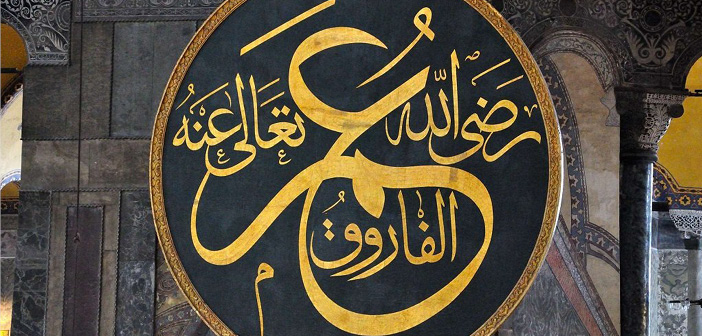
<p>… our liege Lord ‘Umar b. al-Khaṭṭāb was seen in a dream after he moved from this world and he was asked: “What has Allah done with you, O Umar?” He said, “He forgave me.” He was asked, “By what special deed?” He said, “One day I saw in one of the alleys of Medina the Illuminated some children tormenting a bird so I compensated them and set the bird free.¹ Because of this deed, my nurturing Lord has forgiven me.” Everyone considers that our liege Lord ‘Umar — Allah be well-pleased with him — [soared] because of his immense services in the time of the Messenger of Allah — upon him the blessings and peace of Allah — or his caliphate after his time and his Companionship to the Messenger, but he did not mention any of that; and Allah said, “I granted you mercy because of the bird.” This is a sufficient teaching for the intelligent one that he should not leave out anything of the ma‘rūf (good deeds) if he is able to do it.</p>

<p><em>Translated from the Arabic by Shaykh Gibril Fouad Haddad ﵀</em></p>]]></content><author><name>Islamic Network</name></author><category term="patience" /><category term="deeds" /><category term="umar-ibn-al-khattab" /><summary type="html"><![CDATA[In a dream after his passing, Sayyadina Umar ﵅ tells of the small mercy by which he was forgiven — not the deeds the world remembers him for.]]></summary><media:thumbnail xmlns:media="http://search.yahoo.com/mrss/" url="https://marifa.org/assets/img/umar-ibn-al-khattab.jpg" /><media:content medium="image" url="https://marifa.org/assets/img/umar-ibn-al-khattab.jpg" xmlns:media="http://search.yahoo.com/mrss/" /></entry><entry><title type="html">The Prostitute and her Good Deed</title><link href="https://marifa.org/stories/the-prostitute-and-her-good-deed/" rel="alternate" type="text/html" title="The Prostitute and her Good Deed" /><published>2025-11-15T00:00:00+00:00</published><updated>2025-11-15T00:00:00+00:00</updated><id>https://marifa.org/stories/the-prostitute-and-her-good-deed</id><content type="html" xml:base="https://marifa.org/stories/the-prostitute-and-her-good-deed/"><![CDATA[<p><img src="/assets/img/moses.webp" alt="Burial place of Hadrat Musa ﵇" loading="lazy" decoding="async" /></p>

<p>… another example that shows how Allah will forgive everything from a person’s past life because of a small deed is the story of the prostitute from Mūsā’s people. She was travelling from one country to another and had reached a water well. She saw a dog there that was licking the sand in extreme thirst. She took pity on it, went down into the well, drank from it, then filled her shoe with water and tied it up with her scarf. Then she gave the dog water to drink. Later, when she reached the town of one of the Prophets of the Israelites, Allah revealed to that Prophet, “Give glad tidings to so and so that I have forgiven her all her sins because of the mercy she showed to that dog.”²</p>

<p><em>Translated from the Arabic by Shaykh Gibril Fouad Haddad ﵀</em></p>]]></content><author><name>Islamic Network</name></author><category term="kindness" /><category term="deeds" /><category term="mercy" /><summary type="html"><![CDATA[A traveller in the time of Sayyadina Musa ﵇ climbs into a well to bring water to a dying dog — and is granted forgiveness for the whole of her past.]]></summary><media:thumbnail xmlns:media="http://search.yahoo.com/mrss/" url="https://marifa.org/assets/img/moses.webp" /><media:content medium="image" url="https://marifa.org/assets/img/moses.webp" xmlns:media="http://search.yahoo.com/mrss/" /></entry></feed>